
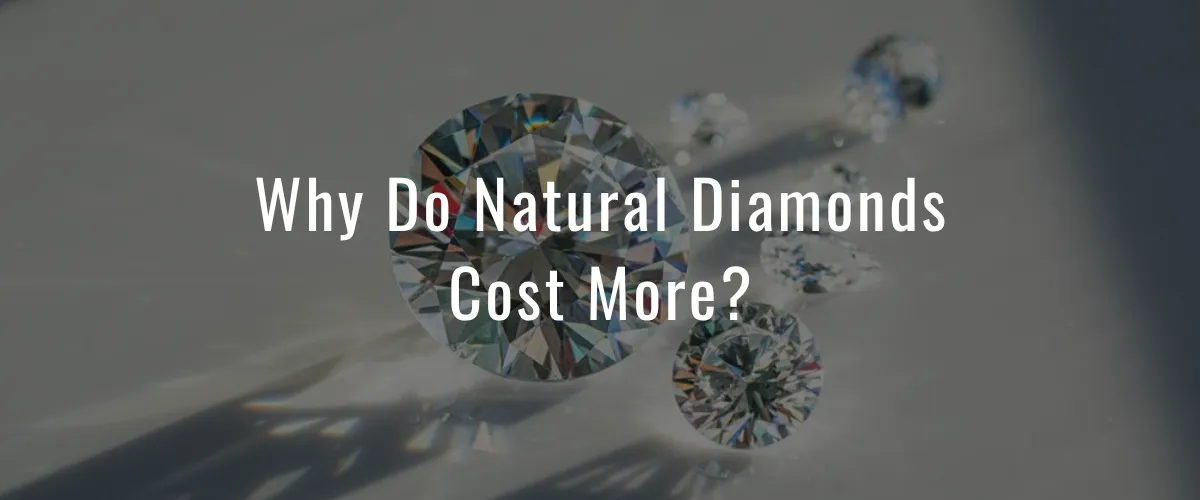
Natural and lab-grown diamonds can look nearly identical at first glance, but the price difference is noticeable.
Natural diamonds cost more mainly because they are rare and formed over billions of years, which gives them stronger long-term and emotional value.
They are finite, each one forms through a rare geological process, and no two stones are exactly the same.
Lab-grown diamonds are produced in controlled environments within a few weeks. They share the same physical structure, but the origin is entirely different.
Time and rarity both influence how these stones are valued.
Lab-grown diamonds do not have this limitation. Production can increase as demand grows, which tends to lower prices over time.
You can find more insights on natural diamond sourcing and supply trends from De Beers Group.
What reaches the customer is a verified diamond with a traceable process behind it.
This difference becomes more noticeable over time.
Buyers often balance these elements to stay within budget. Slight adjustments in color or clarity can reduce cost without making a noticeable visual difference.
For a closer look at how to evaluate these factors, explore this diamond buying guide for a practical breakdown.
Both options serve different purposes, depending on how the diamond is being chosen and used.
Natural diamonds cost more mainly because they are rare and formed over billions of years, which gives them stronger long-term and emotional value.
1. Natural Diamonds Take Billions of Years to Form
Natural diamonds are formed deep within the Earth under extreme heat and pressure over the course of 1 to 3 billion years.
That process cannot be replicated in nature, and it results in a limited supply of stones.They are finite, each one forms through a rare geological process, and no two stones are exactly the same.
Lab-grown diamonds are produced in controlled environments within a few weeks. They share the same physical structure, but the origin is entirely different.
Time and rarity both influence how these stones are valued.
2. Supply Is Limited and Becoming More Constrained
Natural diamonds rely on mining, which comes with real limitations. Finding viable deposits is difficult, and building a mine takes years of investment and planning.
Fewer new sources are being discovered today, which adds pressure to long-term supply.Lab-grown diamonds do not have this limitation. Production can increase as demand grows, which tends to lower prices over time.
You can find more insights on natural diamond sourcing and supply trends from De Beers Group.
3. The Journey from Mine to Market Adds Cost
A natural diamond goes through several stages before it reaches a buyer.
- Extraction from deep-earth mines
- Sorting and grading
- Cutting and polishing
- Certification by independent labs
What reaches the customer is a verified diamond with a traceable process behind it.
4. Value Retention Looks Different Over Time
Natural diamonds are not guaranteed to increase in value, but they tend to hold value more consistently than lab-grown diamonds.
This comes down to a few factors:- Limited supply
- Long-standing demand
- Cultural and emotional significance
This difference becomes more noticeable over time.
5. Emotional Value Still Plays a Role
Diamonds are often tied to significant life moments. Engagements, anniversaries, and family pieces all carry meaning beyond the purchase itself.
Natural diamonds are commonly associated with:- Longevity
- Rarity
- A sense of permanence
6. Price Varies Based on Quality, Not Just Size
Natural diamond pricing is heavily influenced by the 4 Cs:- Cut affects how light is reflected
- Color measures how clear or tinted the stone appears
- Clarity refers to internal imperfections
- Carat reflects size
Buyers often balance these elements to stay within budget. Slight adjustments in color or clarity can reduce cost without making a noticeable visual difference.
For a closer look at how to evaluate these factors, explore this diamond buying guide for a practical breakdown.
7. Trust and Sourcing Also Influence Pricing
The seller plays a role in pricing as well. Established jewelers spend time sourcing and selecting diamonds before offering them for sale.
This process may include:- Working with trusted suppliers
- Reviewing stones individually
- Providing guarantees and after-sales support
So, Are Natural Diamonds Worth the Higher Price?
The answer depends on what matters to the buyer.
Lab-grown diamonds offer a lower upfront cost. Natural diamonds tend to carry stronger associations with rarity and long-term value.Both options serve different purposes, depending on how the diamond is being chosen and used.